
Buying from an independent dealer
- Real people
- No obligation
- Free to check
- Consumer Rights Act coverSame as any dealer
- Manufacturer warrantyUsually none
- Dealer warrantyOften 3 months minimum
- Section 75 cover£100–£30,000 on card/finance
- Key checkMotor Ombudsman membership

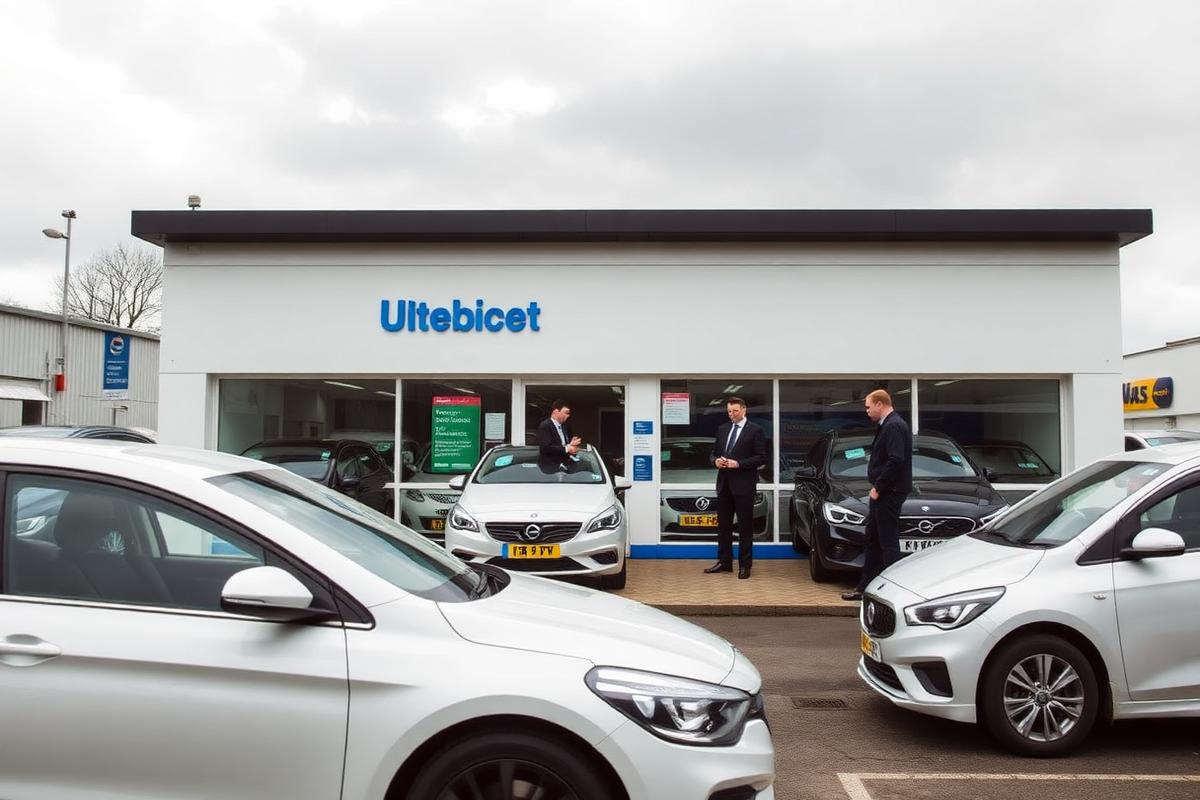
An independent dealer is any used-car trader that isn't part of a manufacturer's franchised network. That covers a huge range of businesses: a single-site trader with a dozen cars on a small forecourt, a multi-branch regional group, or a specialist who only sells one type of vehicle. What they share is that they buy stock from auctions, trade sales and part-exchange rather than from one manufacturer's supply chain, and they set their own prices, warranties and finance arrangements rather than following a brand standard.
That independence is usually good for buyers on price. Without a franchise standard to maintain, independents tend to price closer to trade guide value and are typically more willing to negotiate than a franchised dealer selling an approved-used car with a manufacturer badge attached. The trade-off is consistency. A franchised forecourt is policed by the manufacturer on presentation, paperwork and complaint handling. An independent forecourt is only as good as the people running it, and that varies far more from one outlet to the next.
What the law actually gives you
Wherever you buy a used car from a trader — independent or franchised — the Consumer Rights Act 2015 applies in the same way. Within the first 30 days you have a short-term right to reject a car that isn't of satisfactory quality, fit for purpose or as described. Between day 31 and six months, you still have a right to a repair or replacement, and the burden of proof sits with the dealer to show the fault wasn't present at the point of sale. After six months that burden shifts to you, but the right to a repair, replacement or partial refund doesn't disappear — it becomes harder to prove.
If you pay any part of the price by credit card or you finance the car under a regulated agreement, Section 75 of the Consumer Credit Act 1974 gives you a linked claim against the credit provider for purchases between £100 and £30,000, in addition to your claim against the dealer. This matters more at an independent than a franchised dealer, because if a small trader goes out of business before a claim is resolved, the finance provider is a second party who remains liable.
- Definition
- Motor OmbudsmanA free, independent complaints-resolution service for vehicle sales, servicing and warranty disputes in the UK.Dealers choose to sign up to the Motor Ombudsman's codes of practice; membership isn't automatic or compulsory. A dealer that displays Motor Ombudsman accreditation has agreed to an external, binding complaints process if a dispute with a customer can't be settled directly. Checking membership before you buy is one of the simplest ways to gauge how a trader will behave if something goes wrong later.
Checks to make before you visit
Because quality varies more between independents than between franchised sites, a small amount of homework before you travel does most of the risk-reduction work for you.
- Motor Ombudsman search — the Motor Ombudsman publishes a searchable list of accredited dealers on its website.
- Companies House check — confirm the trading entity is a live UK company with filed accounts and traceable directors, not a recently dissolved or newly incorporated shell.
- Review spread — look for reviews with a mix of praise and honest criticism over time, rather than a cluster of five-star reviews posted in the same short window.
- Vehicle history check — a paid HPI-style check confirms outstanding finance, write-off category and recorded mileage before you view the car.
- V5C keeper chain — the trader's business name should appear as a recent keeper on the V5C logbook; a private name with no trader link on a forecourt car is worth questioning.
Price and negotiation
Independents typically list closer to trade guide value than franchised approved-used sites, partly because running costs are lower and partly because the car doesn't carry a manufacturer's approved-used inspection premium. That usually leaves more room to negotiate on price, part-exchange value or included extras such as a service or a longer warranty. The worked figures below are illustrative only, built to show how the pieces fit together rather than to state what any specific dealer will charge.
| Franchised approved-used | Independent | |
|---|---|---|
| Advertised price | £15,800 | £14,600 |
| Typical negotiated saving | £300 (1.9%) | £700 (4.8%) |
| Manufacturer warranty included | 12 months | None |
| Dealer warranty included | None as standard | 3 months typical |
| Extended warranty top-up cost | N/A | £150–£400 for 12 months |
| Price after negotiation and warranty top-up | £15,500 | £14,300 |
Warranty cover
Because there's rarely a manufacturer warranty left to transfer, most independents include a short dealer-backed warranty — commonly around three months on parts and labour — and offer to sell an extended aftermarket policy on top. These policies are usually underwritten by a separate insurer rather than the dealer itself, and cover varies widely: some pay out for wear-and-tear failures like clutches and suspension components, others only cover sudden mechanical breakdown. Before buying an extended warranty, read what's specifically excluded, check the claim limit per repair, and confirm whether servicing away from an approved garage voids the policy.
Finance at an independent dealer
Independent dealers don't have a manufacturer's captive finance arm, so they typically offer finance through a broker or a small number of direct lender relationships. In practice this often means a wider spread of lenders is available than at a franchised site restricted to one finance house, which can help if your credit history is thin or imperfect. Whoever provides the finance, the same regulatory protections apply: the agreement must set out the total amount payable, the (Annual Percentage Rate — the yearly cost of borrowing including interest and standard fees, used to compare finance offers on a like-for-like basis.), and your right to settle early, and the finance provider — not just the dealer — is a party you can raise a complaint against under Section 75 where it applies.
How independents source their stock
Most independent stock comes from three places: trade auctions, part-exchanges taken by other dealers and passed down the chain, and direct purchases from fleet or lease-return companies. Auction stock can be excellent value because sellers there include leasing companies disposing of well-maintained fleet cars on a schedule, but it can also include cars that struggled to sell privately for a reason. A dealer who can tell you where a specific car came from, and can produce a service history or an auction inspection report, is giving you useful information that a vague answer doesn't. It's a fair question to ask on the forecourt, and most experienced traders answer it without hesitation.
Comparing independents to other channels
It helps to place independents alongside the other main ways to buy a used car in the UK. Franchised dealers sell approved-used stock under a manufacturer standard, usually with a longer included warranty and a higher price. Online supermarkets sell at a fixed, non-negotiable price with wide selection and a fixed delivery or return window, but with less scope to negotiate and no forecourt visit before purchase in most cases. Private sales can be the cheapest route on paper, but they carry none of the Consumer Rights Act protection that applies to trade sales — a private seller only has to describe the car honestly, not guarantee its quality or fitness for purpose. Independents sit between these: negotiable like a private sale, but carrying full trade protection like a franchised dealer.
Inspecting the car before you commit
A test drive on the forecourt tells you less than an independent inspection carried out by a mechanic with no stake in the sale. Organisations such as the AA and RAC offer paid vehicle inspections, and most reputable independents will happily let a buyer arrange one, either on-site or by taking the car to a local garage for an hour. If a trader won't allow this at all, treat it as a serious warning sign rather than a minor inconvenience — a legitimate seller has nothing to lose from an independent check confirming what they've already told you about the car.
Beyond a mechanical inspection, a paper-based vehicle history check is worth doing on every car regardless of how the seller presents it. These checks confirm whether the vehicle has outstanding finance registered against it, whether it's recorded as a write-off and under which category, and whether the mileage recorded matches previous MOT history. None of this takes long or costs much relative to the price of the car, and it closes off some of the most common ways buyers end up out of pocket after a purchase.
Negotiating well
Negotiation at an independent works best when it's based on evidence rather than instinct. Print or screenshot a trade guide valuation for the exact make, model, age, mileage and specification before you visit, and use it as the anchor for any conversation about price. It's also worth negotiating on the total amount payable rather than a monthly finance figure — a lower headline price can sometimes be offset by a longer finance term or a higher rate, so the number that matters is what you'll pay in total across the life of the agreement, not the figure on the windscreen sticker or the monthly repayment slip.
Extras — warranty upgrades, paint protection, GAP insurance — usually have more negotiation room than the car itself, because their margin for the dealer is typically higher. If you want one of these add-ons, it's often more effective to agree the car price first, then negotiate the extra separately, rather than letting the dealer bundle everything into one number that's harder to unpick.
Warning signs worth acting on
A few signals are worth pausing over rather than working around. A trader who refuses to let you take the car for an independent inspection or history check. A V5C that shows a private individual rather than the trading business as recent keeper, with no explanation. An invoice written as a private sale when the seller is clearly operating as a business — this can strip away your Consumer Rights Act protection entirely. A price meaningfully below trade guide value with no obvious reason, which can point to an undisclosed write-off category or a mileage discrepancy. None of these confirms a problem on its own, but any of them is a reasonable prompt to slow down, ask direct questions, and get answers in writing before you commit.
Part-exchange
Most independents will take a part-exchange, though the valuation offered is often a little lower than a franchised dealer might quote, since a smaller trader has fewer routes to resell an unusual or higher-mileage car quickly. It's worth getting an independent online valuation before you visit and treating the part-exchange offer and the new-car price as two separate negotiations rather than one combined number — dealers sometimes use a generous-looking part-exchange figure to offset a smaller discount on the car you're buying.
Putting it together
Buying from an independent dealer isn't inherently riskier than buying from a franchised one — the statutory protections are identical, and many independents run to a very high standard. What differs is the range: because there's no manufacturer standard sitting over every outlet, the gap between the best and worst independents is wider than at franchised sites. The checks in this guide — Motor Ombudsman membership, a Companies House search, an honest spread of reviews, a vehicle history check, and a V5C that matches the seller — are quick to do and consistently separate a straightforward purchase from a difficult one.
Keep a written record of what you're told about the car's history, condition and any warranty terms. Verbal assurances are hard to rely on later if a dispute arises; the same information confirmed on the invoice or by email is far more useful if you ever need to make a Consumer Rights Act or Section 75 claim. A dealer that's happy to put its claims in writing is telling you something useful about how it will handle things if a fault appears after you drive away.
Sources
- Legislation.gov.uk · Consumer Rights Act 2015 · 28 September 2026
- Legislation.gov.uk · Consumer Credit Act 1974, Section 75 · 28 September 2026
- Motor Ombudsman · Find an accredited dealer · 28 September 2026
- Citizens Advice · Problem with a used car you've bought · 28 September 2026
- MoneyHelper · Car finance: your options and how it works · 28 September 2026
- Financial Conduct Authority · Financial Services Register · 28 September 2026
- gov.uk · Buying and selling a vehicle · 28 September 2026
Common questions
Is buying from an independent dealer less safe than a franchised dealer?
Not inherently. Both are bound by the same Consumer Rights Act protections. Individual quality varies more between independent outlets than franchised ones, which is why pre-visit checks like Motor Ombudsman membership and a Companies House search matter more.What warranty should I expect from an independent dealer?
Many include a short dealer-backed warranty, often around three months, with the option to buy an extended aftermarket policy. Always check what's excluded — wear-and-tear cover is worth more than mechanical-breakdown-only cover.Do independent dealers take part-exchange?
Most do, though the valuation offered can be lower than a franchised dealer's. Get an independent online valuation first and treat the part-exchange and purchase price as separate negotiations.Does buying from an independent affect my finance options?
Independents typically arrange finance through a broker or a small number of direct lenders rather than a manufacturer's captive finance arm. Whatever the source, the finance provider must be authorised by the Financial Conduct Authority, and you can check this on the FCA register before signing.What should make me walk away from an independent dealer?
Refusal of an independent inspection, a V5C that doesn't match the trader, an invoice written as a private sale for what is clearly a trade purchase, or a price well below trade guide value with no explanation.How do I check if an independent dealer is legitimate?
Search the Motor Ombudsman's accredited dealer list, check Companies House for a live trading entity with filed accounts, and read reviews that show a genuine spread of experiences rather than only recent five-star ratings.
Check what you'd be offered.
Real people, straight answers. Talk to us before you apply if you want to.
People also ask
How long does buying a car in the UK actually take?
From opening a shortlist to driving the car home, 2 to 6 weeks is typical. A used-car purchase with an existing soft-search quote can be done in 48 hours; a bespoke new-car order from a factory sometimes takes 3 to 6 months.
Is buying privately worth the saving?
Only if you accept the loss of consumer protection and the near-total loss of finance options. On a mainstream car, the private-sale saving is often absorbed by the higher risk of undisclosed faults and the difficulty of financing the purchase.
Is a used car at a franchised dealer automatically part of the approved-used scheme?
Not always. Franchised dealers sometimes sell used cars that fall outside the manufacturer's approved-used scheme, particularly if the car is older or has higher mileage than the scheme allows. Ask the dealer to confirm in writing which category the car you're viewing falls into before you commit.
From Buying from a franchised dealer — what you actually get
Do I have to use the franchised dealer's finance?
No. You're free to arrange finance through any lender or broker you choose and bring it to the dealer as a cash-equivalent purchase. Manufacturer finance can be competitive on newer stock during a promotional period, but it's worth comparing the total amount payable rather than assuming it's automatically the best deal.
From Buying from a franchised dealer — what you actually get
Related reading

Buying a car in the UK — the complete 2026 journey
How to buy a car in the UK end-to-end: budget, product, sourcing, viewing, checks, negotiation, paperwork, delivery and the first 30 days.
Buying from a franchised dealer — what you actually get
What a franchised dealer's price premium buys, how approved-used schemes work, and how to weigh the cost against an independent or private sale.

Buying a car from an online car supermarket
How online car supermarkets price, deliver and return cars, your distance-selling rights, and where finance fits in. A plain-English 2026 guide.