

Buying from an online car supermarket — what you're actually agreeing to
- Real people
- No obligation
- Free to check
- Sticker pricesUsually fixed
- Statutory cancellation14 days (distance selling)
- Retailer return policyVaries by retailer
- Consumer Rights Act 2015Applies in full
- Finance choiceYours to shop around

Buying a used car through an online car supermarket looks straightforward from the outside: browse a website, pick a car from a large catalogue, pay a fixed price, wait for delivery. Underneath that simplicity sits a specific set of legal rights and a genuinely different buying process from walking onto a forecourt. Because the purchase happens without you standing in front of the car and talking to a salesperson, it usually counts in law as a distance sale, which brings a statutory cancellation right that a forecourt purchase does not carry. Understanding that right — separately from whatever return policy a retailer advertises on its own website — is the single most useful thing you can do before you commit.
This guide sets out how the online model tends to work, what the law actually gives you as a distance-selling customer, how that differs from a retailer's own marketing promise of a return window, where finance fits into the process, and what to check before you hand over a deposit on a car you haven't physically seen.
How the online model tends to work
Most online supermarkets stock cars at a single or small number of large preparation centres rather than a network of local forecourts. Cars are photographed to a fairly standard format, listed with a fixed asking price, and searchable by make, model, mileage, colour and spec across the whole stock in one search rather than site by site. Home delivery by an enclosed or open transporter is the default fulfilment method, typically arriving somewhere between a few days and a few weeks after you pay, depending on how far the car has to travel and how busy the retailer's logistics are at the time.
Because there is no salesperson negotiating in real time, prices are generally presented as fixed, though it's still worth asking whether any flexibility exists, particularly on a car that has been listed for a long time. The trade-off for giving up negotiation is typically a larger searchable stock than a single physical dealer could hold, and a defined home-delivery process rather than a forecourt collection.
Your distance-selling cancellation right, in detail
When you buy a car without meeting the seller face to face — over a website, by phone, or by app — the transaction is usually an 'off-premises' or 'distance' contract under the Consumer Contracts (Information, Cancellation and Additional Charges) Regulations 2013. These regulations give consumers a statutory right to cancel most such contracts within 14 days of taking delivery, without needing to give a reason. This is a legal right sitting on top of anything the retailer separately advertises as its own returns policy, and it exists specifically because you didn't get to inspect the goods in person before agreeing to buy.
- Definition
- Consumer Contracts Regulations 2013 (distance-selling right)A legal right to cancel most contracts made online, by phone or off business premises within 14 days of receiving the goods, without giving a reason.The 14-day cancellation period generally runs from the day after delivery. If the retailer doesn't give you the required cancellation information at the point of sale, that period can be extended by up to 12 months. Cancelling under these regulations is different from a retailer's marketing promise of a 'returns window' — the statutory right exists regardless of what the retailer's own terms say, though a retailer's own policy may offer a longer period or fewer conditions. If you've used the car in a way that goes beyond what you'd reasonably do to inspect it in a shop, the retailer may be entitled to deduct an amount for that use when refunding you.
Consumer Rights Act 2015 — your protection once you keep the car
Once any cancellation or return period has passed and you've decided to keep the car, the Consumer Rights Act 2015 governs the ongoing relationship. Under that Act, goods bought from a trader must be of satisfactory quality, fit for purpose and as described. If a fault emerges within the first 30 days, you generally have a short-term right to reject the car for a full refund. Beyond 30 days and up to six months, the trader typically gets one opportunity to repair or replace before you can seek a refund, and there's a presumption that a fault found within that period existed at the point of sale unless the trader can show otherwise. These rights apply to any trader selling used cars, whether the transaction happened online or on a forecourt — buying online does not weaken this protection.
| Consumer Contracts Regulations 2013 | Consumer Rights Act 2015 | |
|---|---|---|
| What it covers | Right to change your mind on a distance purchase | Right to a car that's of satisfactory quality, fit for purpose, as described |
| Reason needed | No reason required | You must show a genuine fault or mismatch with description |
| Time limit | Usually 14 days from delivery | 30 days for short-term rejection; up to 6 years to bring a claim in England & Wales |
| Applies to | Off-premises / online / phone sales | Any sale by a trader, online or in person |
| Typical remedy | Full refund, less a use deduction in some cases | Refund, repair or replacement depending on timing |
An illustrative worked example
Say you pay a £250 deposit and agree a total price of £13,750 for a used hatchback listed on an online supermarket's website. The car is delivered eight days later. On day two, you notice the interior trim colour doesn't match the listing photos and the car has a mechanical fault that wasn't disclosed. Because you're still inside the 14-day statutory cancellation window (which would run until day 22 counted from the day after delivery), you could cancel under the Consumer Contracts Regulations 2013 and claim a full refund of the £14,000 paid, without needing to prove the fault at all — simply changing your mind would be enough within that window. If you'd instead noticed the fault on day 40, after the cancellation window had closed, you would rely on the Consumer Rights Act instead: outside the first 30 days, the trader would typically get one chance to repair the fault before you could insist on a refund or replacement. This example is illustrative only and the exact figures on any real purchase will depend on your contract.
Where finance fits into the process
Some online supermarkets arrange finance directly through their own arrangements with lenders; others simply accept payment from a lender you've sourced yourself. Either way, the finance agreement is a separate legal contract from the sale of the car, and it's worth comparing offers rather than accepting the first one presented during checkout. When you're comparing, look at the total amount payable over the whole agreement, the (Annual Percentage Rate — the yearly cost of borrowing including interest and standard fees, used to compare finance offers on a like-for-like basis.), the deposit required and any mileage or condition restrictions if the agreement is a (A car finance product with lower monthly payments and a large optional final payment (the balloon) if you want to keep the car.), rather than focusing only on the monthly payment figure. If you cancel the car purchase under your distance-selling right, you should also check what happens to the linked finance agreement — cancelling one generally requires unwinding the other, so read the paperwork on both before you sign.
Practical checks before you commit
- Read the retailer's own return/exchange policy in full, and separately note your 14-day statutory cancellation right under the Consumer Contracts Regulations 2013.
- Check the MOT history for the exact registration on gov.uk before you pay a deposit, and compare any advisories against the listing description.
- Get delivery date, condition-on-arrival terms and any return-related mileage cap confirmed in writing, not just verbally.
- Ask directly whether the price is genuinely fixed or whether there is any room to negotiate, especially on slower-moving stock.
- Compare the retailer's own finance offer against at least one outside source before signing, looking at total cost, not just the monthly figure.
- If a fault appears after delivery, act quickly and in writing — the clock on both the statutory cancellation window and the Consumer Rights Act's 30-day period is running regardless of how responsive the retailer is.
Where the model tends not to suit
Buyers who want to negotiate hard on price, who need to physically test-drive several specific examples of a car before deciding, or who are after an unusual or specialist vehicle where each individual example varies significantly, are often better served by a channel where they can view and compare cars in person before committing. Online supermarkets work well when the buyer is comfortable relying on photographs, a documented inspection process, and the statutory and retailer-offered return rights to cover the risk of buying unseen.
What to do if something goes wrong
If a dispute doesn't resolve directly with the retailer, Citizens Advice can help you understand your rights and next steps, and some motor retailers are signed up to The Motor Ombudsman's Chartered Trading Standards Institute-approved code, which provides an alternative dispute resolution route without going to court. Check whether the retailer you're dealing with is a Motor Ombudsman-accredited business, since that affects which complaints route is available to you. MoneyHelper's guidance covers how to compare finance offers and what to do if a finance agreement linked to the car turns out to be unsuitable.
Comparing sticker price against negotiated price
One trade-off worth thinking through before you buy online is what you give up by not negotiating. A forecourt salesperson has room to move on price, particularly on stock that has been sitting for a while, and a confident buyer who is willing to walk away can sometimes secure a meaningful reduction on the advertised figure. An online supermarket's fixed price removes that back-and-forth entirely, which some buyers find a relief and others find frustrating. Neither approach is objectively better; it depends on whether you value the certainty of a fixed price and a documented preparation process over the possibility of talking a price down in person. If price negotiation matters to you, it's worth pricing the same or a similar car through a local dealer before deciding, so you can weigh the online price against a realistic negotiated alternative rather than against the original asking price alone.
What a documented inspection typically covers
Reputable online retailers usually publish some description of the inspection or preparation process each car goes through before it's listed — checks on tyres, brakes, fluids, warning lights, and cosmetic condition, along with confirmation of service history and outstanding finance checks. It's worth reading that description carefully rather than assuming it matches what a franchised dealer's pre-delivery inspection covers, because the depth and rigour of these processes vary between retailers. Ask directly, before you pay a deposit, whether the specific car you're interested in has had a recent inspection report you can see, and whether any faults found during preparation were repaired or simply disclosed. A retailer that's willing to share the detail of what was checked, and what if anything was found and fixed, is generally easier to deal with if a dispute arises later.
Delivery, mileage caps and condition-on-return
If you do plan to use either your statutory cancellation right or a retailer's own return policy, pay close attention to any mileage limit attached. Some retailer return policies cap the miles you can drive during the trial period, and driving beyond that cap can reduce or void your right to a full refund under their own terms — though this is separate from your statutory right, which is based on reasonable use rather than a specific mileage figure. Equally, check what condition the car needs to be returned in: a policy that requires the car to be returned in exactly the condition it was delivered, with no additional wear, scratches or fuel used, is a much stricter promise than one that simply asks for reasonable care. Read this small print before you sign anything, not after a dispute has already started, since it shapes how confidently you can use the return period to genuinely test whether the car suits you.
Sources
- gov.uk · Consumer Contracts Regulations: guidance for business · 28 September 2026
- Legislation.gov.uk · Consumer Contracts (Information, Cancellation and Additional Charges) Regulations 2013 · 28 September 2026
- Legislation.gov.uk · Consumer Rights Act 2015 · 28 September 2026
- Citizens Advice · Problem with a used car you've bought · 28 September 2026
- The Motor Ombudsman · Vehicle sales code of practice · 28 September 2026
- MoneyHelper · Car finance options explained · 28 September 2026
Common questions
Does the 14-day cancellation right apply if I only paid a deposit and haven't taken delivery yet?
The statutory cancellation window generally runs from the day after you receive the goods, so if you haven't taken delivery yet you can normally still cancel the order and get your deposit back, subject to the retailer's own deposit terms. Check the retailer's specific wording on deposits before you pay one.Can the retailer deduct money from my refund if I cancel under the distance-selling right?
Yes, potentially. If you've used the car beyond what's reasonable to establish its nature and features — for example driving it a long distance rather than just testing it briefly — the retailer may be entitled to deduct an amount reflecting that use from your refund.Is buying from an online supermarket covered by the Consumer Rights Act as well as the distance-selling rules?
Yes. The Consumer Contracts Regulations 2013 give you the separate right to cancel within 14 days regardless of fault. Once that window has passed, the Consumer Rights Act 2015 continues to protect you against cars that are faulty, not fit for purpose, or not as described, for as long as that Act allows a claim.What happens to my finance agreement if I cancel the car purchase?
If the finance was arranged specifically for that car and is legally linked to the sale, cancelling the purchase should also allow you to unwind the finance agreement, but the exact mechanics depend on how the two contracts are drafted. Ask the retailer and the lender in writing how a cancellation would be handled before you sign.Do I have to accept the finance offered at checkout by the online retailer?
No. You're free to compare the retailer's finance offer against other lenders or brokers and choose whichever suits your circumstances, provided the retailer is able to accept payment from your chosen finance provider.What should I do if the car arrives with damage the listing didn't show?
Photograph the damage immediately, don't sign anything confirming acceptance of the car's condition until you've raised it, and contact the retailer in writing the same day. You may be able to reject the car under either your statutory cancellation right or, if it's a fault, under the Consumer Rights Act's short-term rejection period.
Check what you'd be offered.
Real people, straight answers. Talk to us before you apply if you want to.
People also ask
How long does buying a car in the UK actually take?
From opening a shortlist to driving the car home, 2 to 6 weeks is typical. A used-car purchase with an existing soft-search quote can be done in 48 hours; a bespoke new-car order from a factory sometimes takes 3 to 6 months.
Is buying privately worth the saving?
Only if you accept the loss of consumer protection and the near-total loss of finance options. On a mainstream car, the private-sale saving is often absorbed by the higher risk of undisclosed faults and the difficulty of financing the purchase.
Is a used car at a franchised dealer automatically part of the approved-used scheme?
Not always. Franchised dealers sometimes sell used cars that fall outside the manufacturer's approved-used scheme, particularly if the car is older or has higher mileage than the scheme allows. Ask the dealer to confirm in writing which category the car you're viewing falls into before you commit.
From Buying from a franchised dealer — what you actually get
Do I have to use the franchised dealer's finance?
No. You're free to arrange finance through any lender or broker you choose and bring it to the dealer as a cash-equivalent purchase. Manufacturer finance can be competitive on newer stock during a promotional period, but it's worth comparing the total amount payable rather than assuming it's automatically the best deal.
From Buying from a franchised dealer — what you actually get
Related reading

Buying a car in the UK — the complete 2026 journey
How to buy a car in the UK end-to-end: budget, product, sourcing, viewing, checks, negotiation, paperwork, delivery and the first 30 days.

Buying from a franchised dealer — what you actually get
What a franchised dealer's price premium buys, how approved-used schemes work, and how to weigh the cost against an independent or private sale.
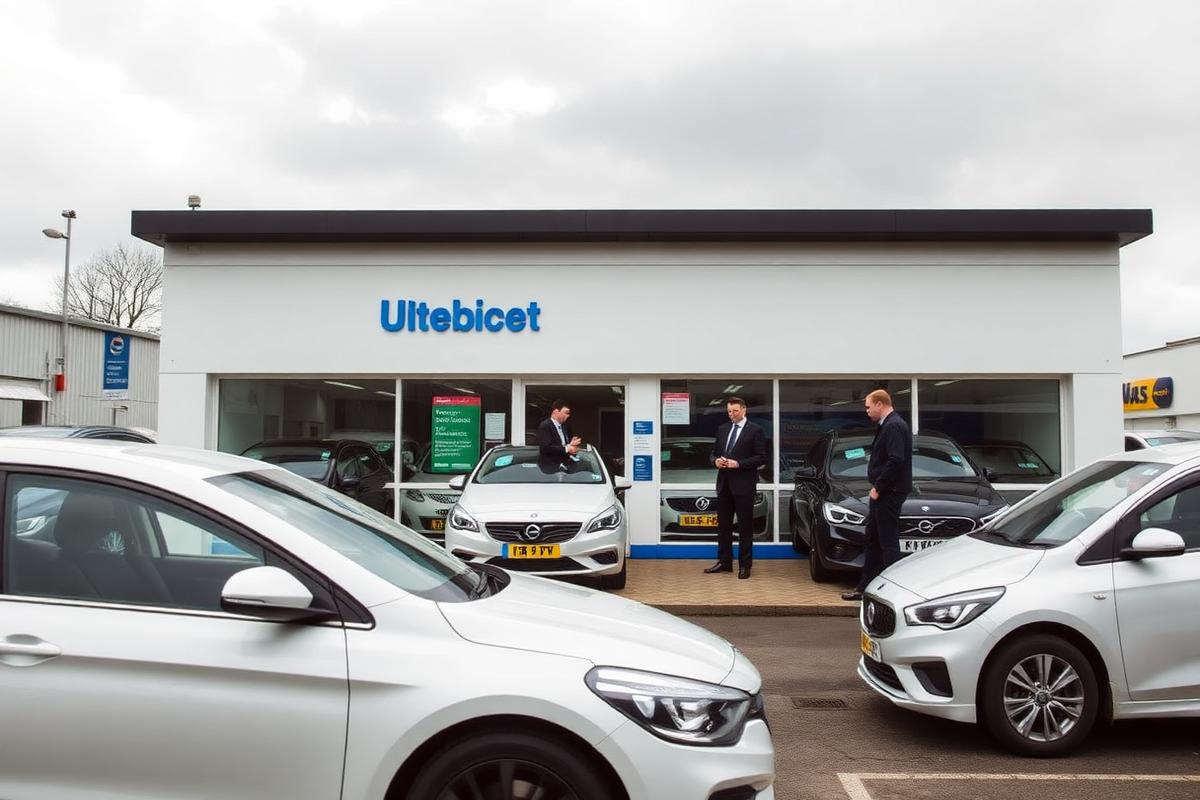
Buying from an independent dealer — what to check first
How independent used-car dealers price, warranty and finance cars, plus the checks that separate a good forecourt from a risky one.