
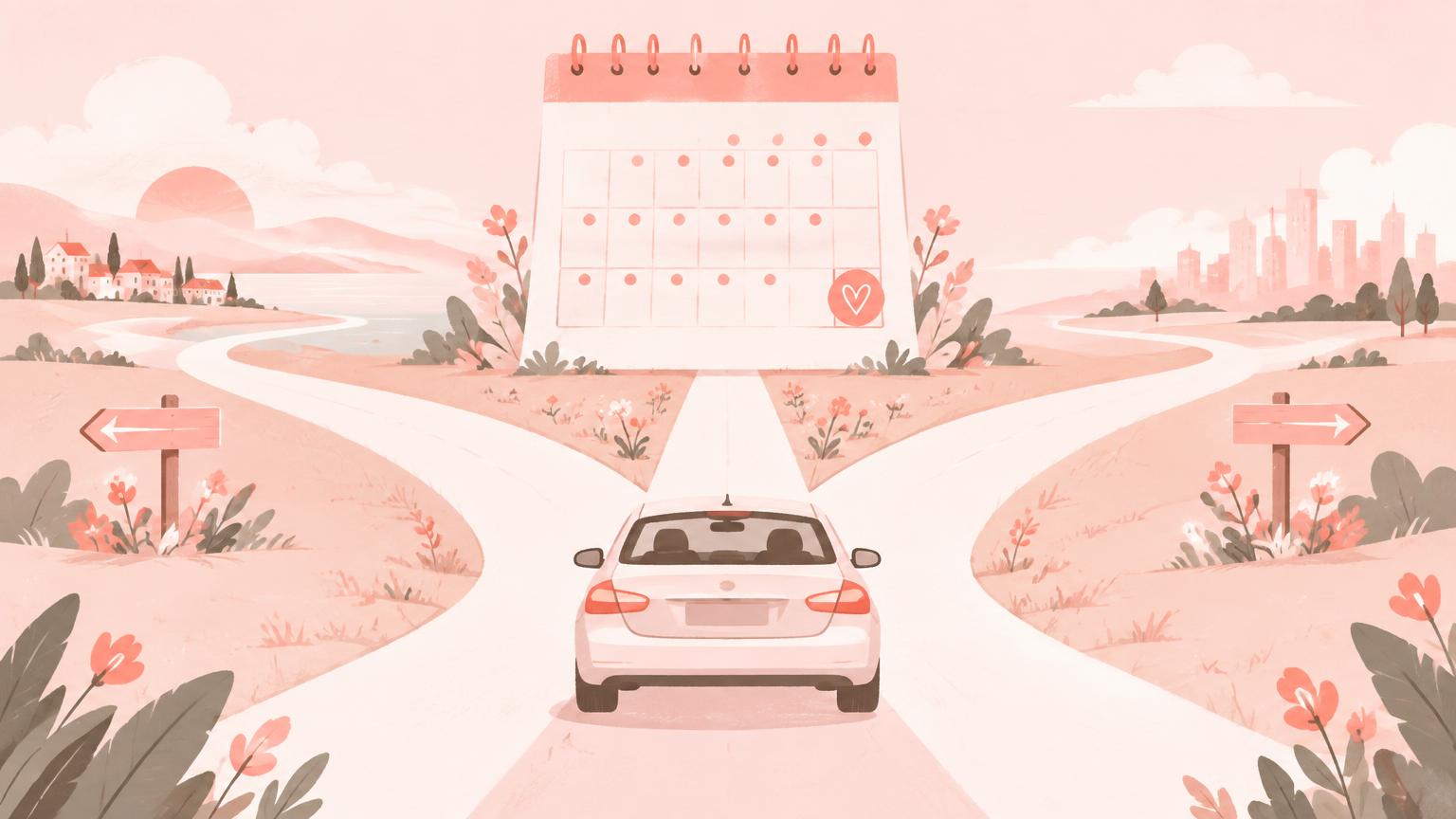
- Balloon paymentOptional, set at the start
- OptionsPay, refinance, return, part-exchange
- Start planningAbout 3 to 6 months before the end
- Return chargesExcess mileage and damage only
The (The large optional sum due at the end of a PCP. Paying it means you keep the car; you can usually return the car instead.) is the part of (Monthly payments cover part of the price; the rest sits in an optional final payment you can pay, swap or hand the car back instead.) that people remember least when they sign and think about most when the end approaches. It is a single, larger sum set at the start of the agreement, often called the optional final payment or guaranteed minimum future value. Because the monthly payments do not cover it, it is what makes PCP monthly figures lower than (You repay the full price in instalments, usually after a deposit. The car becomes yours once the last payment and any fee are made.).
This guide sets out the four things you can usually do when the balloon falls due, what each one costs, and the checks worth doing beforehand. Your own agreement sets the exact terms, so keep it to hand as you read.
- Definition
- Balloon paymentThe optional final payment on a PCP agreement, paid only if you want to own the car.It is set at the start based on the lender's estimate of what the car will be worth at the end, given your agreed mileage. The lender usually commits to that figure, which is why handing the car back is an option if the car turns out to be worth less.
Start early: the three numbers you need
About three to six months before the final monthly payment, gather three figures. Each one changes which option makes sense.
- The exact balloon payment and any option-to-purchase fee, from your agreement or your lender.
- A realistic current valuation of the car, ideally from more than one source, including at least one firm offer.
- Your mileage so far, compared with the allowance, and the excess-mileage charge per mile.
- Balloon payment6,000 £
- Valuation A7,000 £
- Valuation B5,200 £
Option 1: pay the balloon and keep the car
If you like the car, it is reliable and you have the money, paying the balloon gives you full ownership. Many lenders also charge a small option-to-purchase fee. Once paid, the car is yours and there are no more mileage or condition rules.
This tends to make the most sense when the car is worth roughly the balloon or more and you plan to keep it for several years. It makes less sense if the car is worth noticeably less than the balloon, because you would be paying more than its market value.
Option 2: refinance the balloon
If you want to keep the car but do not have the lump sum, you can take a new loan to pay it, sometimes called balloon refinancing. This is a new credit agreement with its own application, rate and term, and usually a new credit check.
Check that the car will still be within the new lender's age and mileage limits by the end of the new term, and that the extra years of payments fit your budget alongside running costs, which tend to rise as cars age.
Option 3: hand the car back
If you do not want the car, or it is worth less than the balloon, you can return it and walk away with nothing more to pay on the finance, subject to the agreement's mileage and condition terms. The lender will usually arrange an inspection. Charges can apply for miles over your allowance and for damage beyond fair wear and tear.
- Read the return-condition standard in your agreement; many lenders follow the BVRLA fair wear and tear guide.
- Take dated photos of every panel, wheel and the interior just before collection.
- Fix small, cheap issues yourself only if the repair costs less than the likely charge.
- Ask how to dispute a charge before collection, not after.
Option 4: part-exchange
If the car is worth more than the settlement figure, a dealer can settle the finance and give you the difference towards your next car. If it is worth less, the shortfall must be paid or, sometimes, added to a new agreement. Adding it means borrowing more than the new car is worth, so always ask to see the figures in writing.
| Your situation | Option that often fits | Watch out for |
|---|---|---|
| Want to keep it, have savings | Pay the balloon | Option-to-purchase fee; is the car worth it? |
| Want to keep it, no lump sum | Refinance | Total amount payable; age limits |
| Car worth less than balloon | Hand back | Mileage and damage charges |
| Car worth more than balloon | Part-exchange | Get more than one valuation |
Mileage: the hidden variable
If you are well over your mileage allowance, the excess-mileage charge can make handing back expensive. In that case, paying or refinancing the balloon, or part-exchanging, may cost less, because a buyer or dealer values the car on its real mileage rather than charging per mile.
- Pay in cash6,000 £
- Refinance 24 months6,600 £
- Refinance 36 months6,900 £
What if you can't afford any option?
Tell your lender early. Lenders are expected to treat customers in financial difficulty fairly, and may be able to discuss options. Free, independent help is available from MoneyHelper and debt advice charities. (Your Consumer Credit Act right to end an HP or PCP agreement and return the car once half the total amount payable has been paid.), which lets you hand the car back once you have paid half the total amount payable, may also be relevant; see our guide to voluntary termination.
A simple timeline
- Six months out: find your agreement and note the balloon, fee and mileage allowance.
- Four months out: get two or three valuations and check your mileage.
- Three months out: decide which option you prefer; ask for a settlement figure if you might part-exchange.
- One month out: confirm the plan with your lender and book collection or payment.
- Final month: keep records of every confirmation in writing.
Getting a fair valuation
Your equity depends entirely on the valuation, so it pays to get more than one. Free online valuation tools give a guide price, but they are estimates. A firm offer from a car-buying service or a dealer is more useful because it is a figure someone will actually pay. Valuations vary with condition, service history, colour, specification and the time of year, so collect two or three within the same week.
Remember that a dealer's part-exchange figure and a cash offer are not always comparable. A dealer may offer a stronger part-exchange price alongside a less generous discount on the next car, or the other way round. Ask for the deal written two ways: the part-exchange value and the price of the new car with no part-exchange. That lets you see where the value really sits.
Settling early instead of waiting
You do not have to wait until the final month. Under the Consumer Credit Act you can ask for a settlement figure at any point and repay the agreement early, which usually reduces the interest you pay. A settlement figure on a PCP includes the balloon, so it is only lower than waiting if there is meaningful interest left to save. Ask your lender for the figure and the date it is valid until.
Settling early can make sense if you have received a lump sum, if you want to sell the car privately, or if you plan to change cars before the term ends and have positive equity. Selling privately while finance is outstanding is not allowed without settling first, because the lender owns the car until the agreement is paid off.
Questions to ask your lender
- What is my exact optional final payment, and is there an option-to-purchase fee?
- What is my settlement figure today, and how long is it valid?
- What is my mileage allowance, and what is the excess-mileage rate?
- Which return-condition standard applies, and how do I dispute an inspection?
- How do I pay the balloon, and what confirmation will I receive?
- If I'm struggling to afford any option, who should I speak to?
Common mistakes to avoid
The most common mistake is leaving the decision until the last fortnight, when there is little time to compare valuations or arrange refinancing. Another is assuming that handing back is always free: excess-mileage and damage charges can be significant. A third is rolling (Owing more on your finance than the car would sell for today. It matters when you want to change cars early.) into a new agreement without seeing the numbers in writing, which can leave you owing more than your next car is worth from day one.
Finally, do not compare options on monthly figures alone. A refinanced balloon over a long term can look affordable each month while costing hundreds more overall. Write the total for each option side by side, including any deposit, fees and charges, and choose with all four totals in front of you.
If you share the car with a partner or rely on it for work, include them in the decision early. The right option is often the one that fits your plans for the next three to five years, not just the next month, so think about how long you would realistically keep this car and what your next one might need to do.
How CarFinanceMatch can help
If refinancing or moving to a new agreement is on the table, you can send an enquiry and we will talk through the routes that might fit. We are a credit broker, not a lender, and we cannot promise an outcome.
Sources
- Financial Conduct Authority · Consumer credit — our rules for lenders · 1 November 2024
- MoneyHelper · Car finance explained · 1 January 2025
- Financial Ombudsman Service · Car finance complaints · 1 January 2025
- legislation.gov.uk · Consumer Credit Act 1974, sections 99 and 100 · 31 July 1974
- BVRLA · Fair wear and tear standard · 1 January 2024
- Information Commissioner's Office · Credit reference agencies and your credit file · 1 January 2024
Questions people often ask 💬
Do I have to pay the PCP balloon payment?
No. It is optional and only needed if you want to own the car. You can return or part-exchange the car instead.Can I refinance a PCP balloon payment?
Often, yes. It is a new loan with its own application, credit check, rate and total cost.What happens if my car is worth less than the balloon?
You can usually hand it back with nothing more to pay on the finance, apart from any excess-mileage or damage charges in your agreement.When should I start planning?
About three to six months before the final monthly payment, so you have time to get valuations and compare options.
Ready to find what fits? 💗
Share a little about your plans, or talk it through with a real person first.
People also ask
Can I switch from PCP to HP part way through an agreement?
Not directly — you would need to settle the existing PCP agreement, which means paying the early settlement figure, and then start a fresh HP agreement, potentially on the same car if the lender agrees to a sale, or on a different one. Ask for a current settlement figure before assuming a switch is worthwhile.
What happens if I go over the mileage limit on PCP?
An excess-mileage charge applies, calculated at the pence-per-mile rate stated in your agreement. It is only charged if you hand the car back at the end of the term; it does not apply if you pay the balloon and keep the car.
Does exercising VT show up as a default on my credit file?
No. VT is recorded under its own status, such as 'Voluntary Termination', which is distinct from a default. It reflects a statutory right being used, though some lenders may still take it into account when assessing later applications.
From Voluntary Termination explained — how the 50% rule really works
I've only paid 40% of the total amount payable — can I still terminate?
Yes. Section 99 allows you to pay a top-up to bring your total contributions up to 50% of the total amount payable, and then terminate. The lender should be able to confirm the exact top-up figure on request.
From Voluntary Termination explained — how the 50% rule really works
Related reading
HP vs PCP — which suits you?
Compare Hire Purchase and PCP: monthly cost, mileage limits, ownership and total cost, with a worked illustrative example and a simple decision framework.

Voluntary Termination explained — how the 50% rule really works
How Voluntary Termination works under the Consumer Credit Act 1974: the 50% threshold, condition rules, credit file impact and worked examples.

Buying from a franchised dealer — what you actually get
What a franchised dealer's price premium buys, how approved-used schemes work, and how to weigh the cost against an independent or private sale.